Only recently have I heard about Irish Moss. I'm planning on trying it out, it's been said to have many health benefits. I've tried out other lesser-known foods such as sei-tan and bulgur and they've been worth the effort.
This weight gain diet I'm on is very hard to follow. You'd think that merely eating more food per day, or at least fulfilling the amount of calories/protein I'd need, would be easy. And for many people it would be, but I've always been used to eating smaller portions of food. And there's the mental factor - I get stressed that I'm overloading my body with nutrients. I also eat a lot of the same food, such as eggs, peanuts, chickpeas, whole wheat flax bread, chicken and others, and I was told that if you eat the same food for prolonged periods of time then its nutritional value decreases. But I've already planned out what foods I need to eat based on their fat/protein/carb levels after extensive research. Do I have to switch it around again? This is where more research comes into play. Exercise is like politics - there are so many different opinions, usually overly outspoken and self-confident, that you have to wade through so much of them just to find out the real truth.
I mean, I've gotten stronger and bigger but not as much as I'd like over the past one and a half years. But that's because I haven't made necessary steps that would bolster my confidence level, such as keeping a diary and continuously measuring my weight. A lot of exercise is mental - when I'm lifting a weight for the final two reps and I'm dying, the amount of time I've spent on exercise and all the food I've eaten rings inside my mind and gives me additional drive to complete the exercise. That's just me, though. I haven't gone about exercise in a comprehensive manner, but I've always got the desire to exercise and that's fundamental...
"I don't hit the ball because it'll only slow my bat down." - Mike Watt "No hope gives me guts." - D. Boon
Saturday, March 27, 2010
It encapsulates a lot.
I should rethink what I write on here.
Wednesday, March 24, 2010
I'm sorry for the lack of posts. I've been steeped in schoolwork and life situations, but that's no excuse. There's really no excuse for neglecting something important in your life (potentially or clearly or otherwise). Maybe spending my time on said issues might be a gain towards my future. But maybe not. If people close to me can't tell me what they think of this website...
It's 14 degrees Celsius outside and I'm spending the day indoors, healing a lower back injury from gym exercise. I can barely bend down. It's just another weird occurrence in my life, out of many that have happened recently. But the thing is, I'm not too stressed. I've been through multiple back/leg injuries before, what I was doing wasn't too strenuous (although it was a rookie mistake - a combination of inadequate stretching and too much weight), it was nice out yesterday as well and I got a taste of it...I should be fine by Friday. I'm feeling better than yesterday evening, already on the come-up. It's good, it's good.
But rather than attempt to create a segue (lazy) I'd like to discuss some advice from authors I've read recently.
Virginia Woolf said that writing should not consist of expressing one's frustrations.
Alex Haley said that in order to be successful one should want to write, not want to be a writer.
Lorrie Moore said in How to be a Writer that one should try to be anything else, first of all.
Out of these three imprints of advice, I can relate to Haley's the most. I've seen it before, people who want to make money or be famous based on a book they want to write. I won't lie, I've entertained these thoughts as well but they don't comprise my drive to write. Money and fame are only by-products of creating a substantial work of art; they aren't the overall goal. If I write a book which ultimately makes me enough money to live on, I won't quit writing thinking that I've accomplished my 'goal'. Which I'm sure people would scoff at based on my youth and the fact that I'm already immodestly billing myself as a novelist, but it's the truth...
I don't necessarily agree with Woolf but she makes a good case regarding quality in literature. Writing for therapeutic release is a very healthy practice, and I do agree that other people should be exposed to it, but to an extent. I always think of the divide between writing something and publishing something - what causes someone to take the publishing step. If you honestly believe that people will benefit from reading your work, and you believe it's original and well-written enough to create a mark in literature, and you care about the state of literature itself and not just how you can profit off of it, then I would say it stands a chance... In my life, I was always attached to literature. I always had a talent and appreciation for it. I read constantly, often books that weren't targeted towards my particular demographic. A small memory I have is of a science fair I attended when I was twelve - there was a girl there my age with an exhibit as well, and she was reading The Partner by John Grisham, which I was also reading at the time. It surprised me and I wanted to tell her but didn't.
My life has been saturated with literature. Which brings me to Moore's point. Although reading and writing have been staples of my life I still haven't been born and bred for a writing career, like say politicians or princes and how they know from a young age where their lives are going to lead. But at the same time I don't see how aiming for a writing career is ill-advised. I think Moore's advice is controversial because it places a limit on how people should understand the writing world. It might sound naïve to say but I've had many small jobs before, all not involving writing - does this mean I'm exempt of Moore's advice? She could mean that I have to have initial career plans not involving writing at all, and writing should strike me at any given moment (I might be exempt of this possibility as well - I started taking Environmental Studies in my first year of university). Does it mean that I should have a career I've spent years on while writing on the side, finally reading for my chance to shine (which is a strong possibility for me as well)? Maybe I should check out the entire book, right?
I'm talking about myself too much.
It's spring, when a young man's fancy turns to love. I never liked the word 'fancy'. And I've always wanted a girl's love no matter what season it was. Maybe restricting myself to conventional 'parameters' like the aforementioned would increase my chances of finding love, because it's what people expect...
Not to sound coy but there's a divide growing in my mind as to what I should share on my website and what I should keep for my own personal writing...thoughts that can't be categorized, that seem too important for my own writing to be shared (and most likely claimed as copyright) on this Internet service...
This website is too important to fall into repetition (e.g. claiming I'm going to write posts regarding topics and then not doing so) or to fall into languishment. I just have to climb out of the hole.
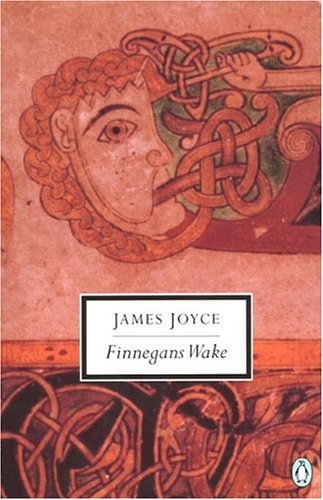
This is a book that I've tried to read by itself, that I've done research into, that I know requires another reference book to properly explain itself to the reader, that will supposedly drive someone insane trying to read it all. It's an amazing book to say the least.
Maybe the world isn't ready to read on the level that Finnegan's Wake demands. Or maybe we're not supposed to.
But why place limitations on the potential of someone's attention span for reading?
If I don't do this post now, I'll regret it later. Some of my favourite books from nine to eleven years old in descending order. The Secret World of Og, Pierre Berton. A Canadian milestone.
Zoom Upstream and Mischief City, both by Tim Wynne-Jones, another Canadian writer. I also enjoyed The Metallic Sparrow and The Outlaw League by Lance Woolaver though I couldn't find photos of either. I met all three writers when I was younger, Berton at school and Wynne-Jones and Woolaver at a young writers' fair...
Batman: Knightfall, Dennis O'Neil. I haven't read this book in some time, but when I first read it at ten years old it stunned me with its writing style.
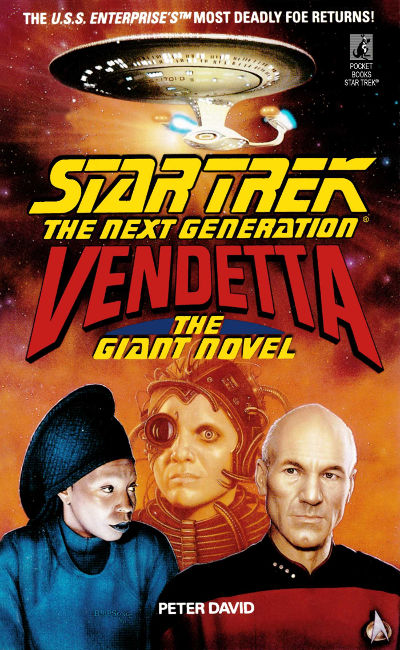
Star Trek: Vendetta, Peter David. I was never a stranger to pop culture back then, a marked change from now. Pride and Prejudice and Zombies? But to each their own. Like Knightfall this book was also infused with style when I first read it. I always liked The Next Generation but never really got into any of the other series.
The Indispensable Calvin and Hobbes, Bill Watterson. Who didn't? Garfield, the Far Side, early FoxTrot, Peanuts and Beetle Bailey as well. All eye-opening cartoons on different levels of wit and content.
When I was eleven I read To Kill a Mockingbird for the first time. Although Harper Lee's style was advanced I still read through it. I didn't read too many great literature novels because I didn't feel like I was ready to understand them, to put as much time into them as they needed...but I still read this book - with that same cover as well. Just a few out of countless others...books I can only remember the contents of, not the titles...books I don't want to share to the public...the ones I read when I was younger that I can't find the right images for...and so on. Trips down memory lane, of reading alone, reading at dinner, some of the books still carrying stains from the food I dropped on them. The last book I read was Thomas More's Utopia. Thanks for the Og picture and enjoying my site, Laura. Her site's here.
Saturday, February 20, 2010
If there's one image I try to remove from my mind it's one of me 'blogging up a storm.' I never liked the word 'blog' from the first moment I heard it - it's another example of ugly portmanteau words that are supposed to reflect modern times. A couple of years ago I read an article in a prominent Canadian newspaper (I can't remember which one) that had suggestions of new words for the 21st century. I can't remember any of the words either - but trust me when I say that none of them looked/sounded like anything I'd add to my personal lexicon. Sometimes I like to joke around and say that the new English words of the 21st century will be found in captchas...but I'm sure that's already been done in the past, with an author wise in computers who used a program to generate as many random words as possible, then attached different meanings to them and tried to write a book out of it all. But successfully achieving a task like that seems like the rarest accomplishment in literature - id est Finnegan's Wake, and Joyce had no idea of computers or their eventual impact on the world, which I'm sure has been expounded on elsewhere.
And while I'm on the topic of words, why am I finding the word 'interesting' being used so frequently nowadays? I take umbrage at it. But since language is excessive and pseudo-intellectual, why bother worrying? Whatever works, works - keep it going. First you get the money, then you get the power, then you get the woman.
And as much as I hate to expose one of my favourite bands, a fault of mine where I want to keep what's lesser known and amazing to myself so it doesn't get overexposed (is it a fault? They'd want the exposure - I guess it's a symptom of youth, keeping secrets)... this is The Sea and Cake. Oui is one of the best albums I've ever listened to, as well as The Fawn and Everybody. Sometimes I feel like writing about how literature and music are wrapped around one another. Until then...
Thursday, February 18, 2010
I was in the midst of creating a larger post but I'm exhausted. So instead I'm sharing a video/song I was first exposed to when I was eleven or so, which still stuck with me. The song's name was in the back of my mind for years, like some others. It's on my mp3 player but I very rarely listen to it. I can still appreciate some of the video's imagery. And this is the only song I know by her.
I've heard it before. Each sentence in the title is from a different cartoonist, painter and photographer respectively. Is it the calling card of the real, successful artist?
Is it pointless to try and explain any artistic endeavour?
If it doesn't make dollars it doesn't make sense, some say. In the case of art this has long been the exception to the rule in most instances, maybe because people believe it has to be the exception...but even the word 'art' makes people renounce its definition in full due to its ubiquitousness...
It's funny how in an essay I read by Flannery O'Connor, she mentions how a lot of good writers she knows paint - not because they're exceptionally good but because they use it as a way of 'seeing'. I've been painting on and off (on a canvas and easel) since I was nine. I still remember how surprised I was on my tenth birthday when...well, why should I share that story here. I paint, but it's not often. It's more often than when I drink caffeine though, which is about three to four times a year.
In recent e-mails with my Creative Writing professor Michael Helm he was kind enough to give me words of encouragement, saying that (this is non-verbatim) the development of my writing and the amount of work that I've created shows that I will (well, can) be an author in the future. I hope so, before loneliness and its comates destroy me. I've been through bizarre instances with the release of my work to the public, shallowness and ridicule, but once in awhile I receive a boost of morale and it means a lot. Professor Helm is a novelist whose work is widely respected - you can find it here at mclelland.com as well as in bookstores.
"Writing only leads to more writing" is a quote by the female French author Sidonie-Gabrielle Colette, more widely known just as Colette. And while this is a famous quote, a piece of advice that she gave to Georges Simenon - "Now take out the poetry" - is one that looms more heavily in my mind. Also the fact that she passed away at eighty-one years of age (maybe this is narrowminded but I find that a lot of authors seem to live very long - recently JD Salinger and P.K. Page passed away and they were both in their early nineties. Rest In Peace).
Socrates denounced writing - he saw writing anything down as detrimental to the human memory and instead preferred to try and remember everything, functioning solely on speech. When I heard this my first thoughts were of personal humiliation, how it was just another block in the enjoyment I got out of my work (by block I mean obstacle - although I like the ambiguousness of the word in this instance). I don't see Socrates' views as a continual source of humiliation though - the times he lived in were obviously much simpler. But to me, his views connect to the way people see the Internet as a source of creating decreased attention spans, like the way people saw TV when it came out. We should not - and this includes writers - try and prey on people's fears and potential worriments. I don't and never did believe that if I watch videos on Youtube and write on my website, it's not going to allow me to concentrate on a book or my own personal work. There's an overflow of instability when it comes to someone's development and potential for a sound mind. I'm not saying I'm completely enlightened. There are negative thoughts I have that stick with me. How I could only be seen as an experiment for study in the arts...how it's so easy to fail but so hard to succeed...how people including myself always want to hear the truth, just not about their own lives...how I place too much happiness in material goods (I'm halfway to buying a BMW - factory earnings), et al. But through all these blocks and many others I've never underestimated my ability to achieve my goals...
I wanted to have the next book I'm writing (I've only shared its name once) to have been done at my current age. And now I don't see it being finished for four years at least. There's a myriad of reasons why - I've got 650 pages of rough material to sort through (which is only ideas and structure, not drafts), I've got school and work (which is the weakest reason), I don't have a girlfriend (which many others would see as the weakest reason but I see as the strongest), and most surprisingly I find that some of the work has less meaning than in the past three years. Not less meaning in terms of how important it is, but in terms of how I want to present it. This relates to Colette's advice that I wrote of earlier - the way that I present the work has been going through changes. Not radical changes (except in the case of one story and how postmodernism can enhance its content) but changes in how the work relates to the rest of literature and the world as a whole. Education is slowing my progress, ironic (and trite, and maybe eventually naïve?) as it sounds, with countless points of inspiration and imagination being found in common pathways to life I've never been able to explore yet.